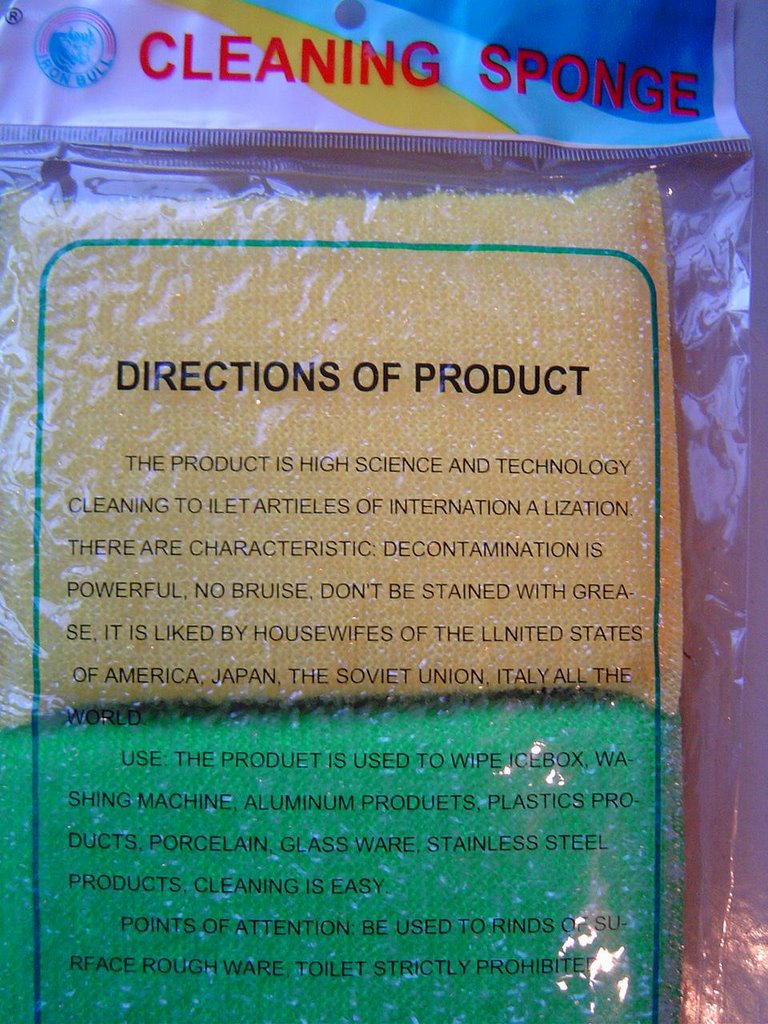
I guess that Minister of Defense of SCG Zoran Stankovic took the metophor of parallels between finding Mladic and finding a needle in a hay stack a bit too literally.
The German state of Baden Württemberg introduced a "guiding" questionnaire for applicants for German citizenship. The questionnaire has been criticized by the Greens and others for being biased, as most questions appear to be focusing particular on the Muslim community and making personal views ("Gesinnung") a
criteria for citizenship.
I think the problem is not so much the questions, they are less problematic than some countries asking for cooking recipes as criteria of citizenship. I am just wondering how many "good Germans" would answer questions such as "Imagine your adult son tells you he is gay and wants to live with another man. How do you react?" or "Your daughter applies for a job in Germany. She is rejected while the job was offered to a black African from Somalia. How do you react?" in the desired way. What is the right answer to become an average German (or average West European in general)?
For the full list in German see the following link from the Frankfurter Allgemeine Zeitung
On the occassion of the 10 year anniversary of the Dayton Peace Accords, I am glad to announce the publication of my study of post-war governance of Bosnia, published with Palgrave in the UK. The book discusses in detail how Dayton has shaped institutions in Bosnia, the attempts at overcoming the legacy of the war and evolution of Bosnia over the past decade.
If you are interested in sample chapters or more detailed information, don't hesitate to contact me at bieberf at gmx.net
I apologise for the high price of 45 Pounds (it's still less than 25 pence per page).
Florian Bieber
Post-War Bosnia: Ethnicity, Inequality and Public Sector Governance
London: Palgrave, 2006. pp. 176 + xvi.
Florian Bieber
http://www.amazon.co.uk/exec/obidos/ASIN/1403998825/balkanacademi-21/202-8610048-1415019?creative=6394&camp=1406&link_code=as1
http://www.palgrave.com/products/Catalogue.aspx?is=1403998825
Ten years after the end of the war, ethnicity in Bosnia continues to matter and the country remains dependent on international intervention. The Dayton Peace Accords signed in 1995 successfully ended the war, but froze the ethnic conflict in one of the most complex systems of government in the world. The book provides an in-depth analysis of governance in this divided post-war country, providing important lessons for international intervention elsewhere around the world, from Afghanistan to Iraq.
Contents
Front Matters
Introduction
Historical Legacies
Cleavages and Inequalities in Post-War Bosnia
Governance and Administration in Bosnia
The Record of the Post-Dayton Elections
Addressing Inequality & Reforming Governance in Post-war Bosnia
Conclusions
Appendice
Notes
Bibliography
Index
'An informative study of the special challenges of governance, stabilization and European integration in Bosnia and Herzegovina. It will be useful to scholars and policymakers alike.' - Sumantra Bose, London School of Economics and Political Science, UK
'Bieber's exemplary study of Bosnia and Herzegovina...is based on extensive research, in-depth knowledge, and a remarkably balanced view of the achievements and shortcomings of the international overlords. Bieber presents a convincing contribution to the debate on how to turn this experiment in state building into a truly self-sustaining democratic and multi-ethnic Bosnia.' - Wolfgang Petritsch, High Representative for Bosnia and Herzegovina, 1999-2002

Here's some evidence that reading is not always a good thing... I read only Kurir and Srpski Nacional, two Serbian tabloids for a week. What this lead to, read
Super Kurir Me on TOL.